
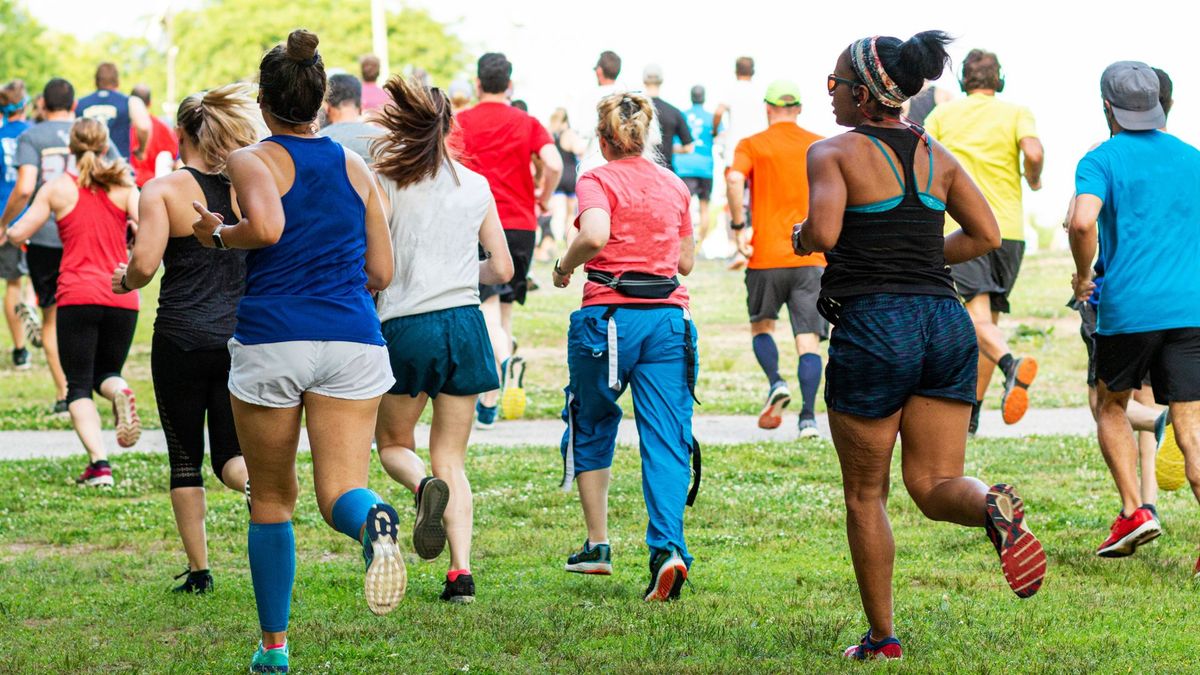
peachtree_race.jpg

Sports Massage for Peachtree Road Race and Marathon Training

If you are training for the Peachtree Road Race, a marathon, or another distance race, sports massage may help you manage the tight muscles, soreness, and movement restrictions that build during training. It is not a replacement for medical care, physical therapy, hydration, strength work, or smart programming. It can be part of a recovery plan when your calves, hamstrings, hips, glutes, low back, or IT band start feeling tight from repeated miles.

The runners who come to our facility in Sandy Springs are usually not injured. They are logging miles, feeling a familiar tightness creep into the same spots, and trying to keep training without that tightness turning into something that changes how they run. That is the work this article is about.

Why Race Training Feels Different on the Body

Distance training loads the lower body in a repetitive way that other workouts do not. The same muscles absorb the same forces, mile after mile, week after week.

  • Repeated foot strike. Thousands of steps per run send force up through the feet, calves, and shins.

  • Long runs. Time on feet adds up, and the hamstrings, hips, and glutes fatigue as form drifts late in a run.

  • Hill work. Climbing loads the calves and glutes; running downhill loads the quads and the front of the knee.

  • Speed work. Faster paces ask more of the hamstrings and hip flexors, which is where many runners feel strain.

  • Heat and hydration. Atlanta summer running adds fluid loss, and a dehydrated muscle cramps more easily.

The result is a predictable set of trouble spots: tight calves, hamstrings, hips, glutes, and lower back. Those are the areas a runner-focused session tends to spend the most time on

Peachtree Road Race Training Brings a Local Summer Challenge

The Peachtree is a 10K run on July 4 through the heart of Atlanta, which means training happens through June heat and humidity. The Atlanta Track Club In-Training for Peachtree program runs for 11 weeks into the summer for exactly that reason: runners need time to adapt to both the distance and the conditions.

The course has one feature every Peachtree runner knows. Just past the Mile 3 marker, the route climbs what runners call Cardiac Hill, a steep stretch of Peachtree Road that tops out near Piedmont Hospital. You can see it on the official course and elevation map. That climb loads the calves and glutes hard, and if those muscles are already tight from training, the hill is where a runner feels it most.

Heat makes hydration part of training, not an afterthought. A runner who shows up to a session underhydrated responds differently on the table, which I often see in summer.

That is the best reason not to wait until race week to address pain or tightness. Tight spots that get attention earlier in training are easier to work with than a problem that has been building for weeks and then meets July heat and a hill at Mile 3.

When Runners Should Consider Sports Massage During Training

Timing depends on where you are in your training block. As a general guide:

  • Early training. An early session can address tightness you are already carrying before mileage climbs.

  • Peak mileage weeks. This is when the lower body takes the most load, and when tight calves, hamstrings, and hips tend to show up.

  • After long runs. Recovery-focused work in the day or two after a long effort may help with soreness.

  • Several days before race day. Lighter work spaced from the race is usually better tolerated. Deeper work the night before is not the time to try something new.

After race day. Once the body has had a few days to settle, a session can support recovery from the effort.

What Sports Massage May Help Runners Notice

Sports massage does not make you faster, and it does not prevent injury on its own. What it can do is give you and the therapist better information about what your body is doing.

  • Tightness patterns that keep returning to the same spot

  • Restricted movement in a hip or ankle that affects your stride

  • Calf and hamstring tension that builds with mileage

  • Hip and glute imbalance that one side feels more than the other

  • Tender areas that come back week after week

Sometimes the most useful outcome of a session is recognizing that an issue needs more than massage. Sharp pain, a problem that keeps returning, or anything that changes how you run may call for a referral to a physician or physical therapist. Research on massage and recovery supports its role in reducing soreness and perceived recovery, rather than as a treatment that fixes injury (massage and recovery review). For pain that is more than training tightness, our medical massage work is a better fit, and serious symptoms should be addressed by a doctor.

What Runners Should Avoid Right Before Race Day

The week of a race is not the time to experiment. A few things to skip:

  • Trying new, deep work too close to the race, since it can leave muscles sore

  • Aggressive treatment on an area that is already irritated

  • Ignoring sharp pain and hoping it clears by race day

  • Skipping hydration in the days before a hot-weather race

  • Waiting until pain has already changed your stride to do something about it

The pattern behind all of these is the same: address tightness and pain during training, when there is time to respond to it, not in the final days when your only real job is to rest and show up ready.

If you are interested in safety questions across different heart-related conditions, our dedicated guide on massage safety with heart conditions expands on clearance, precautions, and what to discuss with your care team.

How Medical & Sports Massage Works With Runners

For runners, the session begins before anyone gets on the table. The intake form is part of the treatment. It tells the therapist what you are training for, where you feel restriction, whether you are dealing with pain, and what you want from the session.

A runner training for the Peachtree may be dealing with calf tightness, hip restriction, knee pain, or a longer-term issue that only shows up after repeated miles. The therapist needs that context to plan the work.

“This is important because it’s going to determine what I do. Why I do it or what I don’t do and why I don’t do it. So I need it if I’m going to treat you properly." - Denise Leslie

That preparation is part of what separates medical sports massage from a general massage appointment. The goal is not to guess. The goal is to understand the runner’s complaint, training load, and movement limitations before work begins. As Denise puts it, starting with a plan helps the therapist think clinically from the beginning rather than running the same routine on every runner.

It also means the session may look at more than the spot that hurts. A runner might book because of knee pain, but the hips, glutes, calves, and ankles may all be part of the picture. The better question is what the body is doing as a system, which is why the work starts with a plan built around your goal rather than a fixed sequence.

Frequently asked questions

Should I get a sports massage before the Peachtree Road Race?
Yes, but timing matters. If you are training for the Peachtree Road Race, schedule sports massage early enough that your body has time to respond before race day. A deeper therapeutic session the day before a race may leave some runners sore. A better approach is to use sports massage during training to address tight calves, hips, glutes, hamstrings, or low back tension before those issues affect your stride.At Medical & Sports Massage, the session begins with your intake and training goal. Denise Leslie’s approach is to understand what your body is dealing with before the work starts because, as she explains, the intake helps determine “what I do, why I do it, or what I don’t do and why I don’t do it.
Why does Medical & Sports Massage ask runners to complete an intake form before the session?
The intake form helps the therapist understand what you are training for, where you feel pain or restriction, and what outcome you want from the session. A runner preparing for a 10K, half marathon, or marathon may need different work than someone coming in for general stress relief. We do not treat the intake as paperwork. We treat it as part of the session plan.
What should runners do before a sports massage during summer training?
Runners should arrive hydrated, complete the intake form, and be ready to discuss recent mileage, pain, tightness, and race goals. Summer training in Atlanta can affect how the body responds during massage, especially if the runner is dehydrated.
How is sports massage for runners different from a regular massage?
Sports massage for runners should be tied to the runner’s training, symptoms, and movement goals. The therapist should know whether the runner is dealing with tight hips, calf strain, knee pain, limited range of motion, or recovery from long runs. The session should not feel random. Denise describes the process as “building the plan” so the therapist starts by “thinking clinical.” That means the therapist should understand the runner’s complaint and explain what is about to happen before the hands-on work begins.
  • denise-leslie-medical-and-sports-massage.png

About The Author

Denise Leslie is a powerhouse mother, entrepreneur, and advocate for pain-free living. With a passion for healing and promoting health and wellness, As a dedicated therapist, Denise is committed to empowering others on their journey to optimal well-being. She understands the importance of community support and never stops serving those around her.