
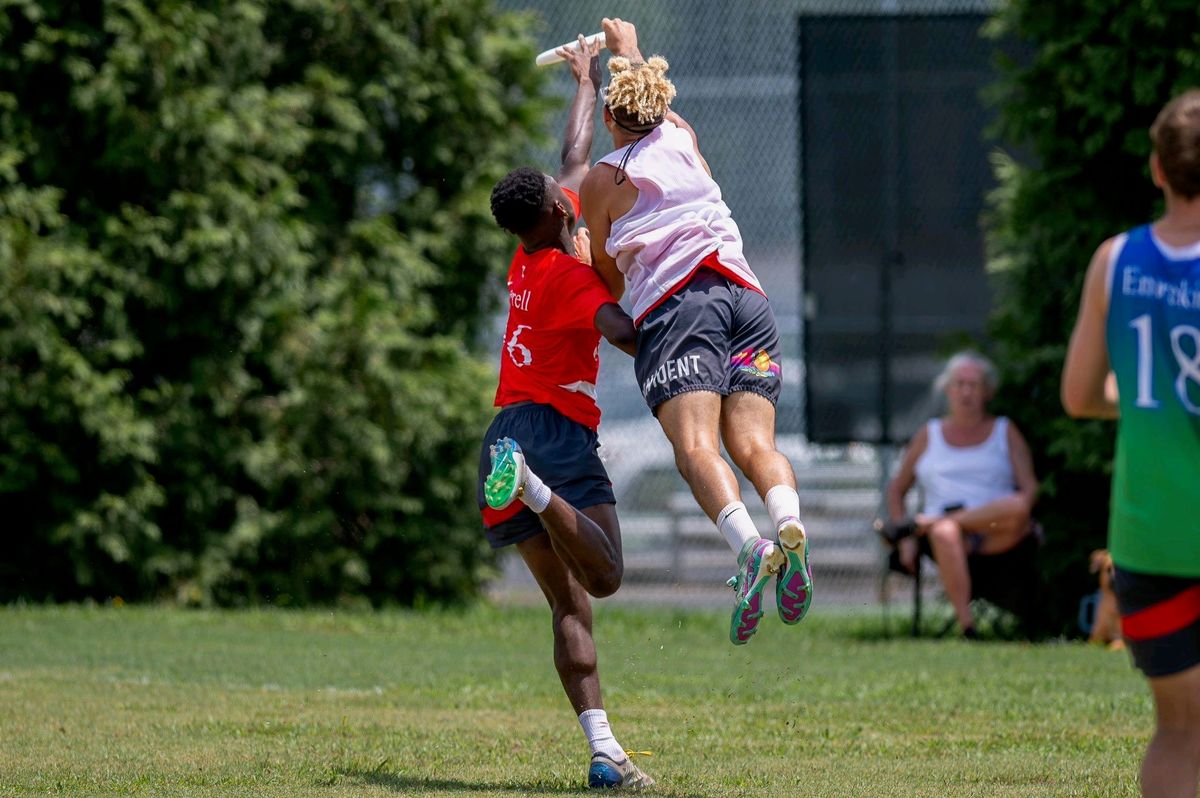
ultimate_frisbee_competition.jpeg

Sports Massage for Ultimate Frisbee and Disc Golf Players

Sports massage for Ultimate Frisbee players involves trained therapists who plan around the player's season stage, recent play, and injury history. Austin Hegmon, LMT, a national frisbee player, and I treat both disc golf and Ultimate Frisbee players at Medical & Sports Massage in Sandy Springs, GA.

The most commonly overused muscles affected are the hamstrings, adductors (inner thigh/groin), and rotator cuff. We often see frozen shoulder. Comprehensive sports massage sessions may include myofascial stretching, Graston techniques, cupping, and neuromuscular therapy on tight or overactive muscles. A 2018 meta-analysis found that massage appeared to be the most effective post-exercise recovery method for soreness and fatigue. Our goal is to get players ready to perform at their highest level before and after games.
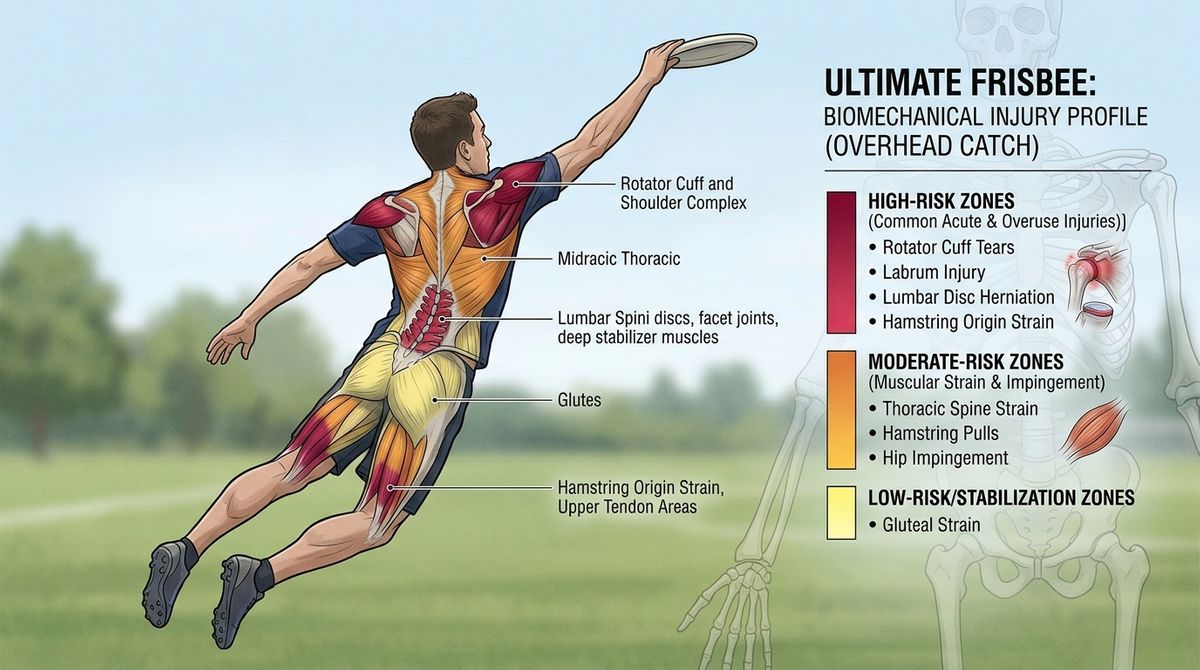
Why do Ultimate players get hurt in a “non-contact” sport?

A 2020 systematic review of 11 studies found that direct contact with another player was the most common injury found in frisbee, even though Ultimate is classified as a “non-contact” sport. The same review found the lower extremities were the most injured body region, with muscle strains and joint sprains to the knee, thigh, ankle, and shoulder being the most common.

Hegmon describes it as deceptively challenging on the body, with a lot of running and jumping. Over the last 10 years, the sport has become more position-specific, bringing more specialized training and repetitive movement that can create wear and tear, including rotator cuff problems. As Hegmon put it, "The training and roles have become hyperspecific, so the treatment needs to be specific too."

Common Ultimate Frisbee and Disc Golf Injuries by Body Area
Body area Sport Cause of injury Early warning signs
Hamstrings and hip adductors Ultimate Frisbee Overuse from repeated sprinting and jumping Tightness early in a tournament day, before play has built up
Achilles tendon area Ultimate Frisbee Repeated loading of the lower leg from running and jumping Tightness around the Achilles early in the day
Knee, thigh, and ankle Ultimate Frisbee Muscle strains and joint sprains, most often from direct contact with another player Restricted range of motion, or holding back at 70 to 80 percent effort
Rotator cuff and scapular stabilizers (rhomboids) Ultimate Frisbee
Disc golf
Repeated position-specific throwing, plus prolonged forward desk posture that limits scapular retraction Less mobility on the throwing side than the non-throwing side
Elbow Disc golf Forehand and sidearm throwing mechanics Elbow pain linked to forehand or sidearm throws
Back Disc golf Commonly reported by disc golfers [AUSTIN TO CONFIRM BEFORE PUBLISHING]
Sources: 2020 systematic review of Ultimate Frisbee injuries; 2015 survey of 883 disc golfers; Skyd Magazine, 2014; Austin Hegmon, LMT, Medical & Sports Massage.

How does a desk job change an Ultimate player's throw?

Most frisbee players do not play for a living, Hegmon says. Many players work desk jobs, so they don't train as professional football or basketball players might.Sitting all day changes which muscles stay active. Postural muscles work while others stay stationary, and a hunched, rounded-forward position can make it harder to pull the shoulder blade back. Hegmon uses the rhomboid muscles as his example. One of the most common throwing movements in Ultimate requires retracting the scapula and then throwing the disc forward, and a player who has been sitting may have difficulty with that first step.

The American Academy of Orthopedic Surgeons lists the rhomboid muscles among the scapular stabilizers, the muscles that keep the shoulder stable during throwing. In a 2014 Skyd Magazine article, the author reported a quick assessment of about 100 high school-aged Ultimate players and found that 49 needed significant shoulder mobility work, and 28 of those needed it only on the throwing side.

A player who sits all day and goes straight to practice is asking the body to move from relatively inactive to performing, and may not feel as good as a player who has been moving, training, and receiving treatment regularly.

injuries_from_frisbee_competition.jpg

How does massage help athletes who play frisbee?

Massage focuses on the areas an athlete overuses when playing frisbee and supports pre-hab and rehab. We may use myofascial stretching and Graston techniques around areas of restriction and tightness, and a massage therapist can also practice neuromuscular therapy (NMT) and work on overactive muscles throughout the body.

Hegmon describes the strategy as getting athletes ready to perform at their highest level, whether before or after games. Each case is individual. A session the day before a game will probably be treated differently than a session the day after one.

The 2018 meta-analysis measured soreness, perceived fatigue, muscle damage, and inflammatory markers after exercise. Hegmon describes a different kind of benefit based on his experience as an athlete. "Almost whether or not my body felt better from doing it, my mind felt better, and the brain-to-body connection felt better." He adds, "Every time I got a massage, I felt like a better athlete because of that."

Schedule a sports massage in Sandy Springs, GA

Medical & Sports Massage is at 6000 Lake Forrest Dr NW Suite 375, Sandy Springs, GA 30328. Our services include sports massage, comprehensive sports massage, medical massage, and Graston treatment. Sessions can be scheduled online or by calling (404) 295-7040.

Austin Hegmon, LMT, is a national frisbee player who also coaches a local high school frisbee team.

FAQ

Is it normal to be sore during an Ultimate Frisbee tournament?

Some soreness is expected, because tournament schedules are grueling. The therapists at Medical and Sports massage watch for tightness in key leg areas, such as around the Achilles or in the hamstrings, especially early in the day before play has built up. Restricted movement, or feeling stuck at 70 to 80 percent effort, is another sign.

Should frisbee players get a sports massage before or after a game?

Both can help, but timing changes the session. Hegmon says a player with a game tomorrow will likely be treated differently than a player who comes in the day after a game. Our therapists also ask where you are in your season, whether you practiced recently, and whether you are early or late in an injury. Then they build the session around those answers.

Does sports massage help with soreness and fatigue after Ultimate Frisbee?

A 2018 meta-analysis of post-exercise recovery methods found that massage appeared to be the most effective method for reducing muscle soreness and perceived fatigue. The study looked at exercise in general, not frisbee specifically. Hegmon also describes a benefit from his own experience as a player: "Every time I got a massage, I felt like a better athlete because of that."

What does a comprehensive sports massage for frisbee players include?

Comprehensive sports massage sessions may include myofascial stretching, Graston techniques, cupping, and neuromuscular therapy (NMT) on tight or overactive muscles. What we use depends on what your therapist finds. If a technique like cupping isn't right for you, we adjust the session and still treat the areas that need work.

How does sitting at a desk all day affect an Ultimate Frisbee throw?

Most frisbee players work desk jobs, and time spent hunched forward can make it harder to pull the shoulder blade back. One of the most common throws in Ultimate starts with that movement, called scapular retraction. Hegmon uses the rhomboid muscles as his example, and the American Academy of Orthopaedic Surgeons lists them among the muscles that keep the shoulder stable during throwing. A player who goes straight from the desk to practice is asking the body to go from relatively inactive to performing.

Are forehand throwers more likely to get elbow pain in disc golf?

Yes. In a 2015 survey of 883 disc golfers, players who threw forehand or sidearm were more likely to report an elbow injury than players who threw backhand. Players in the same survey most often named the elbow, shoulder, back, and knee as injured areas.