
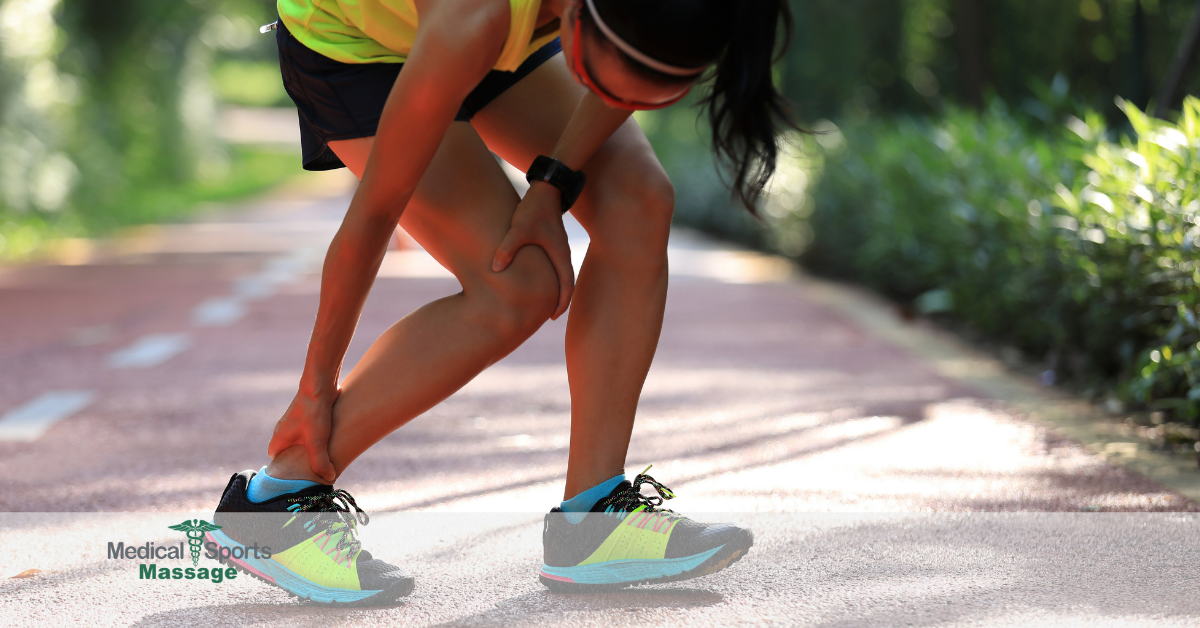
Running_pain.png

Sore or Injured? How to Tell the Difference as Fall Running Season Starts

Normal post-run soreness is a burning or aching feeling in the muscles you just worked, along with general tightness that shows up 24 to 48 hours after a run and settles within a day or two. That soreness comes from microtears in the muscle as it rebuilds, and it typically eases once you get moving through your day.

Running pain that needs attention looks different: sharp or unbearable pain, soreness that is present even at rest, or pain that shows up at the start and end of a run and gets worse with exercise or stretching. Medical & Sports Massage treats that distinction as the starting point for any conversation with a runner, since pushing through real pain can turn a small issue into a larger one.

What Normal Soreness Feels Like After a Run

Normal soreness feels like burning or aching in the muscles you just used, along with general tightness. It shows up 24 to 48 hours after a run and fades within a day or two. That type of soreness is expected as muscles with microtears getting ready to rebuild.

Delayed onset muscle soreness, known as DOMS, is a normal part of running for people who are new to it. Leslie describes it as the same process: microtears and inflammation that many runners feel when they first start out. Once you begin moving through the day and go through functional movement or exercise, normal soreness should start to subside.

Signs Your Pain May Be More Than Soreness

There are some specific markers that separate soreness from something that needs attention: sharp or unbearable pain, pain that is present all the time rather than fading with movement, and soreness at the beginning and end of exercise instead of during it. Pain that worsens with exercise or stretching, rather than easing, is another sign worth taking seriously.

Marker Normal soreness Signs to take seriously
Timing Shows up 24–48 hours after a run Present at rest, or at both the start and end of a run
Intensity Burning or aching during exertion Sharp or unbearable
Response to movement Eases once you start moving Gets worse with exercise or stretching
Duration Fades within a day or two Persists or worsens over time

Why the Soreness Happens

Running form plays a role in where aches show up. If your running form is off, it can create aches, pains, and minor issues, and that a lack of strength training adds to the pattern. Footwear matters too. Worn or incorrect shoes are, the base of the whole issue for consistent runners.

The same microtears that cause normal soreness can also lead to inflammation that puts strain on the tendons and ligaments attaching to bone. That is one way plantar fasciitis develops, where the ligament in the foot becomes inflamed and taut. We look at running form to understand why microtears are happening in the calves, then works on engaging the glutes and core with each step and keeping the shoulders upright. When needed, we also train the upper traps and lats to support that engagement.

For a closer look at one specific pattern, outside-of-the-knee pain during training is its own common issue for runners and is covered in our guide to IT band pain in runners.

What Happens When You Ignore Pain

If pain that needs to be treated is ignored, a grade-one tear can progress to a grade-two tear, and an Achilles strain can worsen. Sharp or unbearable pain, soreness at rest, and pain present at the start and end of exercise are signs to stop and take care of your body rather than push through.

Pay attention to your body. Working through the discomfort of muscles getting stronger and ignoring pain that signals an injury. Pain can create physical and emotional stress, especially when it interrupts a goal someone cares about, like finishing a fall 5K, 10K, half maraton or full marathon.

Preparing Your Body as Fall Running Season Starts

My guidance for runners heading into fall race season starts with hydration, followed by making functional movement part of a regular routine. Runners should include functional movement exercises before training, including high knees and walking lunges.

Functional movement brings synovial fluid to the joints, warms the ligaments and tendons, and brings nutrients and blood to the area. Done consistently, it can reduce the likelihood of microtears and plays a role in both injury prevention and getting more out of any bodywork a runner is doing.

What Should I Do About Acute Running Pain?

For acute pain, Leslie says she may start with RICE: rest, ice, compression, and elevation. Some issues improve with time and care. Others need further evaluation from a physician or physical therapist, and massage is one part of a larger plan rather than a stand-alone fix.

When that evaluation is the right next step, Medical & Sports Massage can point runners toward trusted physical therapy and orthopedic referral partners rather than leaving them to search on their own.

How Does Medical & Sports Massage Help Runners Tell Soreness From Injury?

We use a functional movement assessment, including lunges and orthopedic assessment, to guide home care recommendations for runners. When injury rehab is needed, we work with physical therapy partners and a network of athletic trainers in Sandy Springs and Atlanta, including trainers who can come to the client directly.

Runners who want a broader look at how sports massage fits into training and recovery can start with our full guide to sports massage for runners.

Does Medical & Sports Massage work with athletic trainers, not just physical therapists?

Yes. I work with athletic trainers in Sandy Springs and Atlanta, including trainers who can come to you directly, along with physical therapy partners for structured injury rehab.

Can running shoes cause soreness or injury?

Footwear is one of the first things I look at. Correct shoes are the base of the whole situation for runners putting in regular mileage. Along with running form and strength training, they play a big role in where aches and minor issues show up.

Is it normal for new runners to feel sore after every run?

Yes. What you're feeling is DOMS, delayed onset muscle soreness, and it's a normal part of running when you're new to it. It's the same microtears-and-inflammation process behind regular post-run soreness, just more noticeable while your body adjusts to the load.